


Stainless Steel Jackplate 150mm (6”) – EU Made
Stainless Steel Jackplate 150mm (6”) – EU Made
Heavy-duty stainless steel Jackplate - built in the EU for maximum strength and durability. No aluminum. No flex. No compromise.
In stock
Couldn't load pickup availability
- Secure checkout
- Fast EU Shipping
- 30-day returns
EU Legal Guarantee Minimum 2-year legal guarantee


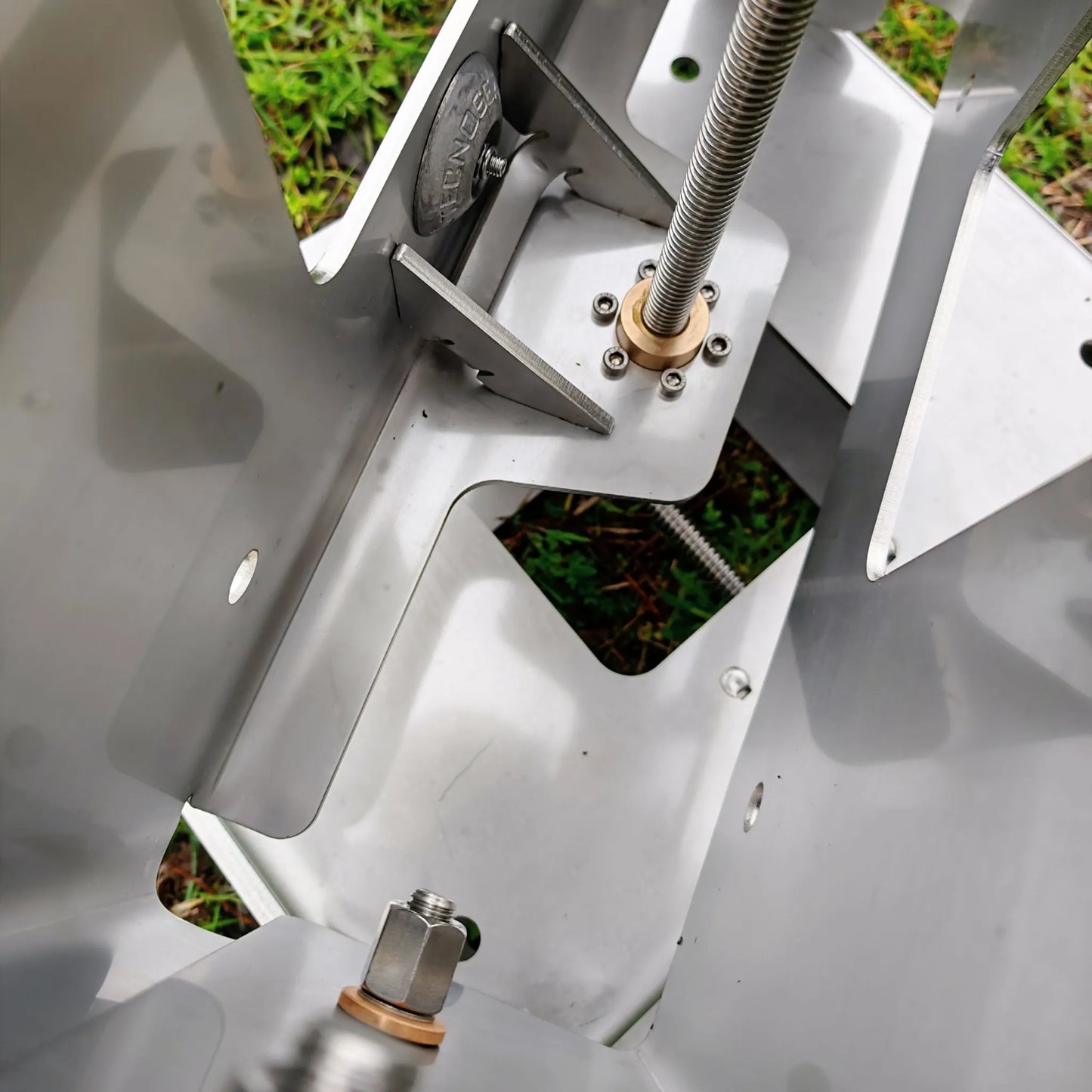
150 mm setback. Stainless-steel construction. Manual height control.
The DonMarine 150 mm (6") manual jackplate mounts between the boat transom and outboard, providing additional setback and adjustable engine height in a heavy-duty stainless-steel assembly.
Rated for outboards up to 200 HP / 250 kg, it combines a standard BIA mounting pattern, mechanical height adjustment, A4 stainless-steel clamping hardware and replaceable sacrificial-anode protection.
- 150 mm (6") setback
- Up to 200 HP / 250 kg
- 5 mm AISI 304 stainless-steel construction
- TR14 trapezoidal-screw height adjustment
- 140 mm total lift: 100 mm adjustment + 40 mm static lift
- 10 mm height-reference markings
- Standard BIA outboard mounting pattern
- 50 mm replaceable Zn / Al / Mg disc anode
Mechanical height adjustment
Engine height is adjusted mechanically using the central TR14 trapezoidal screw and bronze nut. The four side clamping bolts secure the sliding assembly once the desired height has been set.
- Support the engine and loosen the four side clamping bolts.
- Turn the central adjustment screw to raise or lower the outboard.
- Use the 10 mm reference markings to check the selected height.
- Retighten the side clamping bolts to the torque specified in the Installation & Safety Manual.
- Water-test the setup and recheck the installation.
Never operate the height-adjustment screw while the side clamping bolts are fully tightened. Follow the Installation & Safety Manual for the complete adjustment procedure.
Stainless steel, built for marine use
The jackplate is manufactured from 5 mm AISI 304 stainless steel and uses A4 stainless-steel clamping hardware, bronze bushings and a bronze adjustment nut. An AISI 316 version is available on request.
5 mm AISI 304 stainless-steel structure Heavy-duty stainless-steel plates form the main structural frame. A4 stainless-steel clamping hardware The side-clamp assembly uses M12 A4-70 fasteners with Schnorr safety washers and load-spreading washers. Bronze sliding and adjustment components Bronze bushings and the bronze adjustment nut provide bearing surfaces between moving components. Replaceable sacrificial anode A 50 mm disc anode is fitted for galvanic-corrosion protection. Zinc, aluminium and magnesium options are available for different water conditions.Optimise your outboard height
A jackplate lets you change the vertical position of the outboard without remounting the engine on the transom. Depending on the hull, engine, propeller, load and installation height, adjustment may change RPM, acceleration, steering feel, cruising efficiency and top speed.
There is no single correct height for every boat. Start conservatively, test the boat on the water and raise the engine only while maintaining reliable propeller grip, cooling-water supply and safe handling.
Technical specifications
AISI 316 version available on request
Frequently asked questions
What is the difference between the 4" and 6" jackplates?
The primary difference is setback. This model provides 150 mm / 6" setback, while the other DonMarine version provides 100 mm / 4" setback.
What engines can I use with this jackplate?
The published DonMarine rating is up to 200 HP and 250 kg outboard mass. Both limits must be respected.
Does it use the standard outboard bolt pattern?
Yes. The jackplate uses the standard BIA outboard mounting pattern. Always confirm the boat, engine and transom configuration before installation.
Can I adjust the height with the engine installed?
Yes. Height adjustment is performed using the TR14 mechanical adjustment screw after the four side clamping bolts have been loosened. Follow the support and adjustment procedure in the Installation & Safety Manual.
How should the sacrificial anode be maintained?
Inspect the anode at least every six months and replace it when it has been reduced to about 50% of its original size. Maintain direct metal-to-metal contact between the anode and jackplate.
Is an AISI 316 version available?
Yes. Contact DonMarine before ordering if you require an AISI 316 stainless-steel version.
Which sacrificial anode should I use?
Choose the anode material for the operating environment: zinc for saltwater, magnesium for freshwater, or aluminium for brackish / saltwater use.
Bought the previous version and I can get on plane now! Shipped fast.

It seems to be of a very good standard and a very good workmanship!